Published : Jun 10, 2026 19:34 IST – 7 MINS READ
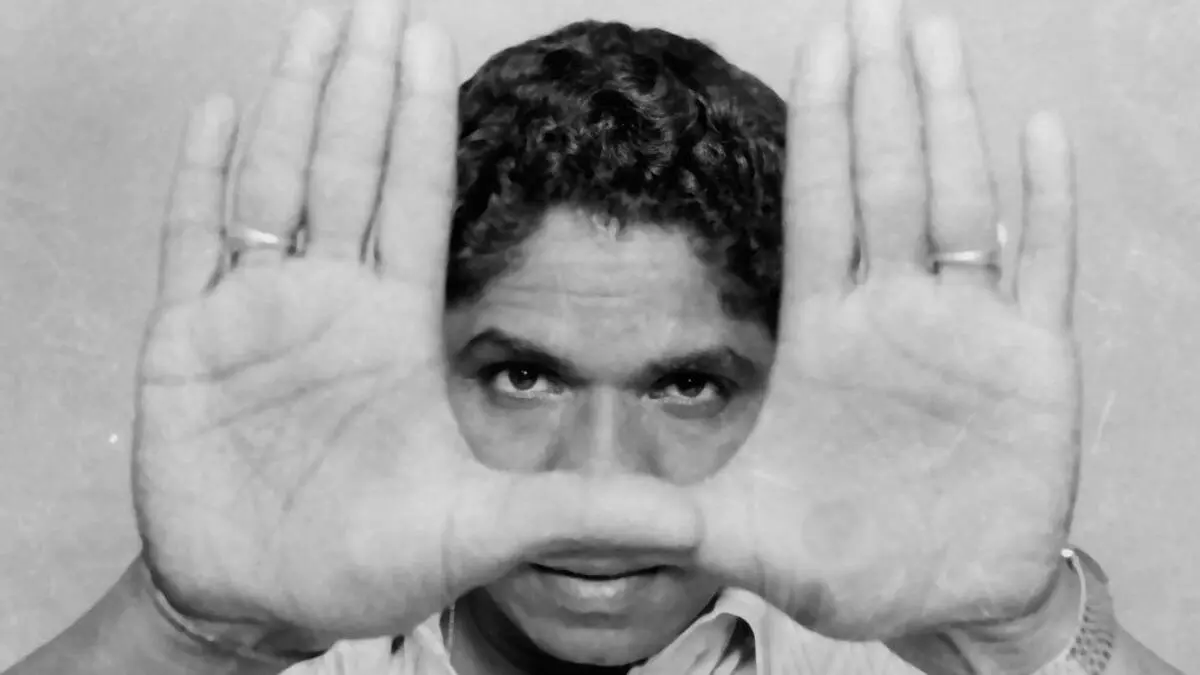
Like many great filmmakers, Bharathiraja was fascinated by violence and romance. He reached his artistic peak when portraying these emotions.
| Photo Credit: The Hindu Archives
In 2011, I invited Bharathiraja to preside over the Vishnupuram Literary Award ceremony held in Coimbatore. He requested certain arrangements: accommodation in a five-star hotel, flight from Bangalore, and car from Coimbatore to Theni. We agreed to all of them and made the necessary arrangements. The award that year was being presented to the senior Tamil novelist Poomani.
Arriving in Coimbatore, Bharathiraja was met by his friends at the hotel. One of them pointed out that his photograph was not prominently displayed on the posters and invitations. He had not noticed anything amiss until then. After hearing this, he became angry and called me.
I explained the purpose and history of the award. The Vishnupuram Award had been instituted by my readers’ forum to honour major literary figures in Tamil. For many years, I have written about how some of our finest writers often remained unrecognised by institutions such as the Sahitya Akademi, while more popular writers received widespread attention. The award was conceived as an effort to acknowledge and celebrate serious literature.
We had no sponsors; the entire event was funded through contributions from friends and readers. I told him, “It is our policy. We are honouring a great writer, and therefore all attention should be directed towards him.”
Key Insights & Highlights
“Yes, yes! That is the right approach,” Bharathiraja replied. He attended the function and delivered an excellent speech.
The next day, before leaving, he insisted on reimbursing the entire cost of his visit. But, of course, we could not accept the money. A few days later, someone from the film industry called and asked for my bank account details. Assuming it was related to a film payment, I provided it. Soon afterwards, I received a relatively big sum, and Bharathiraja called to say, “I want to contribute to the endeavour. You people are doing a great job.” But he referred to it in Tamil as “our” endeavour.
I knew Bharathiraja personally, and we had many long discussions about his films and Tamil cinema in general. Mentally, he was like a 10-year-old boy—always curious, energetic, and quick-tempered. Whenever I met him, he would immediately begin discussing all his future film projects.
Each time, he seemed to have at least 10 new story ideas waiting to be made into films. He narrated them with great enthusiasm, often jumping up to enact scenes from the stories. He would laugh, cry, and become completely immersed in the narration. But if he sensed that we were not sufficiently impressed, he would instantly dismiss the story and move on to another.
Bharathiraja is widely regarded as one of the greatest filmmakers in Tamil cinema. In the Tamil cultural sphere, we tend to lavish praise on almost everyone, especially after their death. Political leaders and film personalities, in particular, are often elevated to the status of demigods. This makes any balanced evaluation of a public figure difficult. Whatever we say easily becomes part of the general culture of adulation that dominates the media. Yet, I would still like to say this: Bharathiraja was a genius of a kind.
What exactly was his achievement? In the late 1950s, the art film movement began in India, with Satyajit Ray’s Pather Panchaligenerally regarded as its starting point. In Malayalam cinema, Adoor Gopalakrishnan’s Swayamvaram gave a major impetus to the movement. In Tamil cinema, Jeyakanthan’s Unnaipol Oruvan marked the beginning of a similar trend. However, unlike Bengali and Malayalam cinema, the art film movement never truly flourished in Tamil Nadu.
Within a decade, a new form of filmmaking emerged in Bengali, Hindi, Marathi, and Kannada cinema—the so-called “middle cinema”. It can be described broadly as a compromise between art cinema and commercial entertainment. It adopted the realism of art films while presenting stories in a more dramatic and exotic manner. Bharathiraja was the pioneer of this middle cinema in Tamil Nadu. He drew inspiration from the realistic narratives developed by the Kannada art film movement.
Key Insights & Highlights
Middle cinema moved away from the theatrical style that dominated commercial films. It took filmmaking out of the studio and into real locations, creating a new generation of cinematographers. It encouraged a restrained and natural style of acting, bringing many new actors into cinema. It sought to tell stories rooted in everyday life and therefore emphasised strong, believable characters rather than conventional heroic figures. These are the changes that Bharathiraja brought to Tamil cinema.
Bharathiraja created a new cinematic language with the support of his cinematographer Nivas. He introduced a new generation of actors, beginning with Kamal Haasan, and brought to the screen unconventional protagonists such as the lame Chappani in 16 Vayathinile and the village poet in Kizhakke Pogum Rail. These films became major box-office successes and marked the decline of the old, theatrical, hero-centered style of filmmaking.
A still of actors Kamal Haasan and Rajinikanth from 16 Vayathinile.
| Photo Credit:
The Hindu Archives
Many young directors followed his path and began making neo-realist films. A generation of aspiring filmmakers, eager for a fresh cinematic approach, gathered around him and went on to develop distinctive styles of their own. In this way, Bharathiraja ushered in a new era in Tamil cinema. That is why he is regarded as one of the defining figures of Tamil filmmaking. Personally, I consider him the greatest director in Tamil film history. I was not surprised when Adoor Gopalakrishnan expressed a similar opinion.
Like all major filmmakers, Bharathiraja had his limitations. He had his share of clichés and occasionally made simplistic or overly exotic films. In his later years, he experimented with a fragmented style of narration—as in Bommalattam—but the results were not always successful.
Yet some sequences in his films remain among the finest examples of storytelling in Tamil cinema. I would recommend a section in Kizhakku Cheemayile, where a joyful family gathering gradually turns into conflict and ultimately erupts into a massacre. Just watch its smooth progression, it is an apt example of his fine film-making.
Like many great filmmakers, Bharathiraja was deeply fascinated by violence and romance. He reached his artistic peak when portraying these emotions. His films are driven by a major vision expressed through various characters and strong visual imagery. Yet, in conversation, I often felt that he himself was not fully conscious about his vision. Again and again, he narrated the story of the common man’s ego—how it dominates an individual’s life and ultimately leads him to destruction. Most of his films are tragedies, and their root cause is human ego: an ego shaped and reinforced by culture, and we think it is the culture itself.
He was always emotional, outspoken. Like all geniuses he never truly matured. During the 1990s, he suffered a series of commercial failures and went through a difficult period. Then, in 1992, Thevar Magan, directed by Bharathan, was released and became a major success. Today, it is regarded as a cult classic.
Bharathiraja’s cook had unusual freedom in speaking to him. On the dining table, he bluntly remarked, “That is your film. You should have made it. Instead, an outsider has made it. Where will you hide your face now?”
Bharathiraja was furious. He immediately instructed his assistants to book tickets and set out to watch the film. On the way, he continued grumbling about Bharathan, insisting that no outsider could truly capture the spirit of a southern story.
But when the film ended, he immediately telephoned Bharathan and broke down in tears.
Key Insights & Highlights
“You made it! You bastard, you made a great film! I want to hug you and kiss you, you bastard!”
Bharathan later recounted this incident with a tender smile. When Bharathiraja’s assistant told me this story, he too was moved to tears. He said, “Sir, he eats, he drinks, and he shouts at people. But he is an artist. In every cell in his body, he is an artist.”
B. Jeyamohan is a Tamil and Malayalam language writer and literary critic from Nagercoil.