The poet whose name Bharathiraja took for his own once sang of finding his dark god everywhere the world had taught itself not to look – Subramania Bharati, in “Nandalala,” discovering Krishna’s colour in the black sheen of a crow’s wing, his touch in the scald of fire. And 2,000 years before Bharati, a singer of the Kurunthokai, remembered only by the eponym his own image earned him – Sembula Peyaneerar, “the poet of red earth and pouring rain” – had already given Tamil its founding image of love: two hearts mingled past all parting, as red earth and pouring rain.
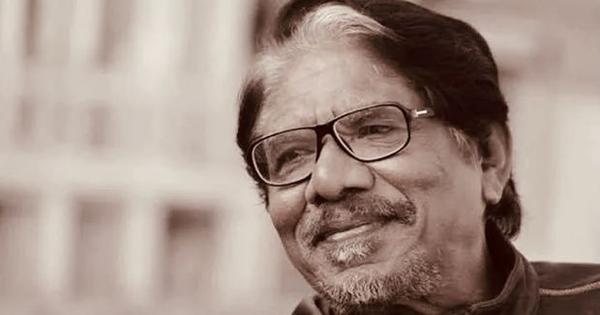
Between those two poets – the ancient voice of the red soil and the modern voice of the disregarded – runs the entire cinema of Bharathiraja. On the morning of June 10, 2026, at his home in Chennai, after a prolonged illness, that cinema came to rest. He was eighty-four.
Key Insights & Highlights
“Poongatru Thirumbuma” – will the soft breeze turn back this way? – his most haunted song had asked. On Wednesday, Tamil Nadu learned the answer of all elegies: the breeze does not return; only the fragrance stays.
The Tamil Film Producers Council, which he once led as president, confirmed the news; the state announced full honours; an industry that has spent half a century arguing with him, imitating him and being remade by him fell, for a moment, into the sort of silence his own films knew how to hold, even if momentarily between the beats of his great collaborator, Ilaiyaraaja. The rain has gone back into the sky; the red earth keeps what it was given.
Bharathiraja is survived by his wife, Chandraleela, and his daughter, Janani. His son, the actor Manoj Bharathiraja, predeceased him in 2025, a grief from which those close to the director say he never fully recovered.
A filmmaker’s obituary is usually a ledger of titles and awards, and Bharathiraja’s ledger is formidable: more than 40 films spanning five decades, six National Film Awards, the Padma Shri, and the honorific by which Tamil Nadu knew him – Iyakkunar Imayam, the Himalaya of directors. But to tally Bharathiraja is to miss him.
What died in Chennai wasn’t simply a director but a cartography: a way of locating Tamil cinema in the Tamil earth. Before him, the village existed in Tamil film as a painted flat, a studio pastoral through which stars in unsoiled veshtis strolled toward the interval. After him – after a single film in 1977 – the village became the screen’s native country, and the studio became the exile.
He was born Chinnasamy on July 17, 1941, in Theni Allinagaram, in what was then the Madurai district of the Madras Presidency. This fact is worth dwelling on because Bharathiraja is among the rare auteurs whose biography and aesthetic are the same sentence.
The dry southern districts, with their palmyra silhouettes, their red and black soil, their tank bunds and threshing floors, were not locations he discovered. They were the body into which he was born.
His apprenticeship took him through the workshops of Puttanna Kanagal, P Pullaiah, M Krishnan Nair, Avinasi Mani and A Jagannathan. From Kanagal, in particular, Bharathiraja absorbed the conviction that melodrama and psychological acuity were not enemies. But the decisive education preceded all of this. It was the education of having stood in a field at noon and known what the light does to a face that works under it.
This is why it is right – and the burden of this obituary – to read Bharathiraja as the very symbol of the rural in Tamil cinema, despite the inconvenient brilliance of his urban detours. Sigappu Rojakkal (1978), his chilling psychosexual study of a misogynist killer prowling a modern Madras, remains one of Tamil cinema’s most formally daring thrillers. Tik Tik Tik (1981) extended that urban noir idiom.
These films succeeded, and they matter. Yet they read, in the long arc of his career, as proofs of range rather than declarations of identity – a poet demonstrating that he can also write prose.
The city in Bharathiraja’s cinema is a place of pathology, anonymity and predation; the village, even at its cruelest, is a place of relation. His camera in the city observes; his camera in the village belongs.
When critics speak of the “Bharathiraja village,” they do not mean a setting. They mean a dramaturgy: the community as chorus and tribunal, the landscape as moral witness, rumour as weather, caste as gravity, and desire as the seed that the soil will either nourish or bury. The fields, the dusty roads, the village square and the sea in his cinema were never backdrops; they were characters – sometimes quiet observers, sometimes accusers, sometimes the only mourners left.
Bharathiraja changed, too, the very faces that the screen permitted. Against an industry wedded to studio pallor, he photographed dark or brown-skinned heroines and simple heroes, men without pancake and women without porcelain, and insisted that the Tamil sun be allowed to show its work. It was an aesthetic decision that was also unmistakably political: a quiet repatriation of beauty.
Tamil cinema has had many successful directors but very few genuine trendsetters, filmmakers after whom the medium’s default settings change. CV Sridhar was one.
In the late 1950s and 1960s, Sridhar gave Tamil film a new romantic idiom, a lightness of touch and an urbane elegance, shooting Nenjil Or Aalayam (1962) in a matter of weeks on a single hospital set, and launching newcomers with the confidence of a man who trusted his own grammar more than the star system, for instance, romance juxtaposed with modernity in studio spaces and actual locales: Gemini Ganesan and the bi-cycler Saroja Devi in Kalyana Parisu (1959), and Ravichandran and Kanchana in Kadhalikka Neramillai (1964).
If Sridhar was the first true trendsetter in this strict sense – one who alters the industry’sreflexes and replenishes its bloodstream with new ideas and new people – then Bharathiraja was the second, and arguably the more total. Sridhar changed how Tamil cinema loved; Bharathiraja changed where it lived, whom it photographed, and who got to make it.
The roll call of careers Bharathiraja began reads like a census of two generations in Tamil cinema. Among the leads he introduced were Karthik and Radha, both debuting in Alaigal Oivathillai (1981); Radhika, in Kizhakke Pogum Rail (1978); Revathi, in Mann Vasanai (1983); Rati Agnihotri, in Puthiya Vaarpugal (1979); Rekha, in Kadalora Kavithigal (1986), and Sukanya, in Puthu Nellu Puthu Naathu (1991), to name a few.
The character-actor bench Bharathiraja assembled – Janagaraj, Vadivukkarasi, Chandrasekhar, Pandiyan (introduced as a hero in Mann Vasanai), Napoleon, Nizhalgal Ravi (whose very screen name bears the title of the Bharathiraja film that made him), Goundamani in an early supporting turn – became the connective tissue of Tamil cinema for decades. And Bharathiraja was the director with the wit to look at Sathyaraj, then typecast as a swaggering villain, and see a romantic lead capable of startling vulnerability.
More remarkable still was his habit, almost an experimental method, of pushing his own crew in front of the camera. K Bhagyaraj came to him as a writing assistant and left as a star and a major director, given his first lead in Puthiya Vaarpugal. Manivannan, who joined his unit as an assistant and story-writer on Nizhalgal (1980), became one of Tamil cinema’s most prolific director-actors.
Manobala, Ponvannan and Thiagarajan travelled the same corridor from clapboard to credit. Behind the camera, Bharathiraja’s long partnership with acclaimed cinematographers PS Nivas and B Kannan – whom the industry called “Bharathiraja’s eyes” – trained a way of seeing that an entire school of rural filmmakers, from the 1980s to the present resurgence of southern-soil cinema, has inherited.
CV Sridhar opened a door; Bharathiraja dismantled the wall. That is the difference between a stylist and a trendsetter in the true sense of the term, and Bharathiraja was the truest Tamil cinema has known.
16 Vayathinile was conceived, by Bharathiraja’s own account, as a black-and-white art film to be made with the assistance of the National Film Development Corporation. It emerged instead as a colour film and a commercial triumph, and in that accident lies its historical meaning.
It is the rare work that collapses the parallel cinema/popular-cinema binary not by argument but by existing. Here was location shooting, ethnographic texture, an unsentimental eye for village patriarch, songs the state sang for a generation, and three performers at the dawn of their legends: Sridevi as Mayil, Kamal Haasan as Chappani, Rajinikanth as Parattai.
Read closely, the film is a study in aspiration and its policing. Mayil, 16, wants to be a schoolteacher – want, that is, a future authored by herself. The film arranges around her three figures of masculinity: Chappani, the limping, derided farmhand whose devotion is the only love in the film without a transaction inside it; Parattai, the village lout whose menace Rajinikanth distilled into a matchstick and a refrain (“Idhu eppadi irukku”) that entered the language; and the city veterinarian Satyajith (played by Satyajith) whose polish conceals the oldest predation of all.
The village does not protect Mayil; it surveils her. Her education makes her conspicuous, her beauty makes her vulnerable, and the film’s tragedy is constructed precisely at the junction of the two. When violence finally comes, it comes as Chappani’s transformation – the despised body becoming the instrument of justice the community refused to provide. Kamal Haasan plays the metamorphosis with a physiological precision that announced Indian cinema’s most complete actor.
Formally, the film established the entire Bharathiraja lexicon in a single utterance: natural light trusted to do dramatic work; the song sequence re-imagined as labour and landscape (Sendhoora Poove, Aattukkutti Muttaiyittu) rather than ornament; non-professional faces salting the frame; Ilaiyaraaja’s score letting folk melody carry veiled details.
A wave of village films followed, as imitation always follows revelation. But 16 Vayathinile remains the threshold itself: Tamil cinema stands on one side of it as a single medium, and on the other as another.
If 16 Vayathinile was the manifesto, Mudhal Mariyathai is the masterpiece – the film in which Bharathiraja’s village attains the moral density of great literature. Its sources are telling: a story drawn in part from Jayakanthan, the laureate of Tamil interiority, fused with the memory of a foreign film about an ageing artist and a young woman.
From these, Bharathiraja built something with no real precedent in Indian popular cinema: a love story between Malaichami, the married, ageing, upper-caste headman of a village, and Kuyil, a young boatwoman from a labouring caste – an affection that is never consummated, never named, and never anything less than the deepest relationship either will know.
Key Insights & Highlights
The film opens at Malaichami’s deathbed and unfolds in flashback, a structure that does more than organise the plot: it places the entire narrative under the sign of mortality, so that every glance between the headman and the boatwoman is already an elegy for itself. Bharathiraja’s title – “First honour,” the respect owed before all else – announces the film’s true subject. This is not a romance about desire but about mariyathai: about a man who receives ceremonial deference from an entire village while being humiliated nightly within his own marriage, and a woman whose poverty has never once compromised her self-possession.
What Malaichami finds on Kuyil’s boat is not an affair; it is the first place he is seen. The river crossings become the film’s central metaphor – two people suspended between banks, between castes, between the permitted and the felt. The village, that throbbing collective organism Bharathiraja understood better than any director, watches, gossips, and tightens.
The film’s most discussed achievement is its taming of Sivaji Ganesan. Bharathiraja took the most magnificently theatrical instrument in Indian acting and asked it for stillness – and Sivaji, in what many regard as the finest performance of his late career, delivered a Malaichami built of half-smiles, lowered eyes and weathered patience, matched beat for beat by Radha’s luminous, unservile Kuyil and by Vadivukkarasi’s ferocious Ponnatha, the wife whose venom the film is careful to root in her own injury.
The ledger of honours (the National Film Award for Best Tamil Feature, Vairamuthu’s National Award for the lyrics, Filmfare awards for both leads) records the consensus. But the film’s deepest legacy is grammatical. It proved that Tamil popular cinema could hold an autumnal, platonic, caste-crossed love to the very end without vulgarity and without compromise, and that an audience would weep for restraint as readily as for spectacle. The circle closes where it began, at the deathbed, with Kuyil’s arrival – and Bharathiraja allows the film’s two great loves, dignity and death, to meet at last in the same frame.
A year later, Bharathiraja carried his village to the edge of the land and let the sea complete it. Kadalora Kavithaigal (Poems by the Sea) is set in a Christian fishing hamlet on the southern coast. The change of soil changes everything: the palmyra gives way to the catamaran, the temple drum to the church bell, and the dust-brown palette of his Theni country to salt, surf and whitewash.
Into this world, the film places Chinnappa Das (Sathyaraj, rescued from a decade of villainy and revealed as a leading man), a rough, unlettered local tough, and Jennifer (Rekha, with her schoolteacher’s umbrella and unbreachable dignity), the young teacher whose presence rearranges his entire understanding of what a life might be for.
The film’s central conceit is among the most beautiful in Tamil cinema: courtship as literacy. Chinnappa Das, who cannot read, submits himself to Jennifer’s patient instruction – letter by letter, an ex-convict humbled among schoolchildren – because love has given him, for the first time, something that needs to be written. The alphabet becomes the film’s true romance.
Bharathiraja, who began his career by taking the camera out of the studio, here performs a subtler liberation: he takes language itself out of the schoolroom and returns it to desire, suggesting that the poem – the kavithai of the title – is not an ornament of feeling but its strongest evidence. Around this, the director builds his familiar chorus – the watching hamlet, the anxious church, the gradient of class and refinement between the rough man and the lettered woman – and lets the sea do the work the river did in Mudhal Mariyathai: the element of crossing, of distances that can be looked across long before they can be travelled.
And over it all, Ilaiyaraaja’s score moves like weather off the water: Adi Aathadi losing the longing of the Sivaranjani raga upon the shore in its twinned happy and grieving versions, the melodies folding hymn and folk-tune into a single coastal idiom. The film’s emotional signature is sublimation: love that ripens, not aimed at possession but toward transformation, leaving Chinnappa Das permanently altered – literate, gentled, enlarged – whatever the shore finally grants or withholds.
If 16 Vayathinile gave Bharathiraja’s cinema its soil and Mudhal Mariyathai its ethics, Kadalora Kavithaigal gave it its theology: the conviction that love’s first miracle is not union but the making of a self worthy of it.
It is not enough to say that Bharathiraja changed Tamil cinema’s content. He dismantled its inherited grammar, and the dismantling deserves to be named for what it was – decolonial aesthetics.
The continuity system that Indian studio cinema had absorbed from classical Hollywood was never a neutral toolkit: it was a regime of the sensible, in Rancière’s sense, which disciplined time into linear progression, space into proscenium, and the body into legible, governable units.
Bharathiraja’s most radical gestures were precisely his infractions against this regime. The jump cut planted inside a long take – time stuttering within its own continuity, as though the duration of the shot could not contain the intensity passing through it; the repetition of a gesture in slow motion, a face or a turning body offered to the viewer twice, thrice, as ritual rather than information – these were not flourishes but refusals.
They replaced the colonial clock with ceremonial time: the time of the festival, the lament, the harvest, in which an instant is not consumed and discarded but circled, savoured, mourned. Where the imported grammar asked the image to advance the plot, Bharathiraja asked it to dwell.
Nowhere is this counter-grammar more condensed than in his floral frontality – the close-up of a face entering the frame with flowers arranged at its edge or massed in the backdrop, of which the iconic conjunction of Sridevi and the sunflower in 16 Vayathinile is the founding instance.
The shot is, on its face, simple: a girl and a bloom sharing a frame. But its lineage is not Hollywood’s glamour close-up, which isolates the star from the world in a halo of diffusion; it is the frontal address of Tamil visual culture – temple iconography, the kolam at the threshold, the garlanded portrait, the calendar print – in which the face and the flower belong to a single continuum of the auspicious.
Mayil is not decorated by the sunflower; she is equated with it, a heliotropic life turning toward a sun that will scorch her. In restoring this indigenous scopic regime to the centre of popular cinema – dark faces, frontally met, flanked by the flora of their own soil – Bharathiraja performed what decolonial thought calls the reactivation of a subjugated aesthesis: ways of sensing that the coloniality of taste had filed under the folk, the kitsch, the backward. He filed them back under the beautiful.
And then there is the land itself, which his camera approached not as property, view or backdrop – the three colonial postures toward landscape – but as an unbound energy to be framed without being captured.
The seaward sweep of the Nagercoil-Kanyakumari country in Kadalora Kavithaigal, where land, light and water argue at the subcontinent’s last edge; the pastoral amphitheatres of his native Theni and the Kongu country around Kovai that underwrite Mudhal Mariyathai and so many of the village films – these are rendered in compositions that insist on the horizon’s sovereignty over the human figure. His signature movement belongs here: characters traversing the frame laterally, right to left and left to right, in long choreographies across bunds, shores and ridgelines, while Ilaiyaraaja’s melody – haunting, modal, unhurried – carries the image akin to wind carrying seed.
The lateral track is the humblest of camera movements and, in Bharathiraja’s hands, the most political: against the vertical monumentality of the colonial gaze and the possessive push-in of the star vehicle, it proposes horizontality – the human moving along the earth rather than over it, in step with the music of his own ground.
In the raw, unbound energy of these passages – duration, landscape, lateral motion and melody fused into a single breathing figure – Bharathiraja achieved something that remains unmatched in cinema history: a popular art that decolonised not the subject of the image but the very act of seeing.
No account of Bharathiraja can be honest that treats Ilaiyaraaja as an accompanist. Theirs was one of the great director-composer symbioses of world cinema, to be spoken of in the breath that holds Federico Fellini and Nino Rota, Sergio Leone and Ennio Morricone, Raj Kapoor and Shankar-Jaikishan, Vijay Anand and SD Burman.
Both men came from the southern hinterland; both carried folk music not as research but as mother tongue. When they met on 16 Vayathinile – the composer barely a year past his own village-born debut – Tamil cinema acquired, in a single stroke, both its new image and its new sound.
The partnership ran like a river through the heart of Bharathiraja’s filmography. Kizhakke Pogum Rail, Sigappu Rojakkal, Puthiya Vaarpugal, Niram Maratha Pookkal, Nizhalgal, Alaigal Oivathillai, Kaadhal Oviyam, Mann Vasanai, Mudhal Mariyathai, Kadalora Kavithaigal are from an unbroken decade in which it is indeed impossible to say where the mise-en-scene ends, and the orchestration begins.
What made the collaboration exemplary was its division of labor at the level of meaning. Bharathiraja’s frames withheld; Ilaiyaraaja’s scores confessed. The director would hold a face in silence, trusting the composer to tell us – through a solitary flute over a string drone, through a folk cadence harmonised with Western counterpoint – what the face would not.
Sendhoora Poove mourns before the plot does. Vetti Veru Vaasam makes the fragrance of cut vetiver a synonym for unspoken love. Poongatru Thirumbuma, in the grieving voices of Malaysia Vasudevan and S Janaki, asks the returning breeze the question Malaichami can never ask aloud. In the same film, the composer lent his own voice to Antha Nilava Than, as though the score’s author could no longer remain outside it.
Even Bharathiraja’s re-scored silences – the ambient hum of fields, the slap of water on a hull – were compositional decisions made jointly, for Ilaiyaraaja knew, as few film composers have, when the truest cue is the absence of one. When, in the 1990s, the director turned to Kizhakku Cheemayile and Karuthamma to a young AR Rahman – trendsetting once more, even in farewell – the parting only confirmed what the decade together had built: a body of work in which image and music had achieved not synchronisation but marriage.
Every Bharathiraja film began with his own voice on the soundtrack, greeting the audience “En iniya Tamizh makkale, my beloved Tamil people – a salutation no other director presumed and none could have carried. It was, like everything in his cinema, a formal device that was also a creed: the conviction that the audience was not a market but a kinship, and that the camera’s first duty was to the people the studio had cropped out of the frame.
The lineage Bharathiraja founded is now Tamil cinema’s main road. Every film that trusts a real horizon, every dark-skinned lead photographed without apology, every village rendered as a moral organism rather than a postcard, every assistant director handed a destiny walks a path Bharathiraja cut with a 1977 film about a 16-year-old girl who wanted to be a teacher.
The man who took Tamil cinema out of the studio has now stepped out of the frame himself. Somewhere in the southern districts this evening, the light is doing what it always did in his films – falling without flattery, and with infinite tenderness, on faces that work. The earth Bharathiraja photographed so faithfully receives him now as one of its own. En iniya Tamizh makkale: the greeting stands, and the people answer it with grief.
Swarnavel Eswaran is a Professor in the Department of English and the School of Journalism at Michigan State University.