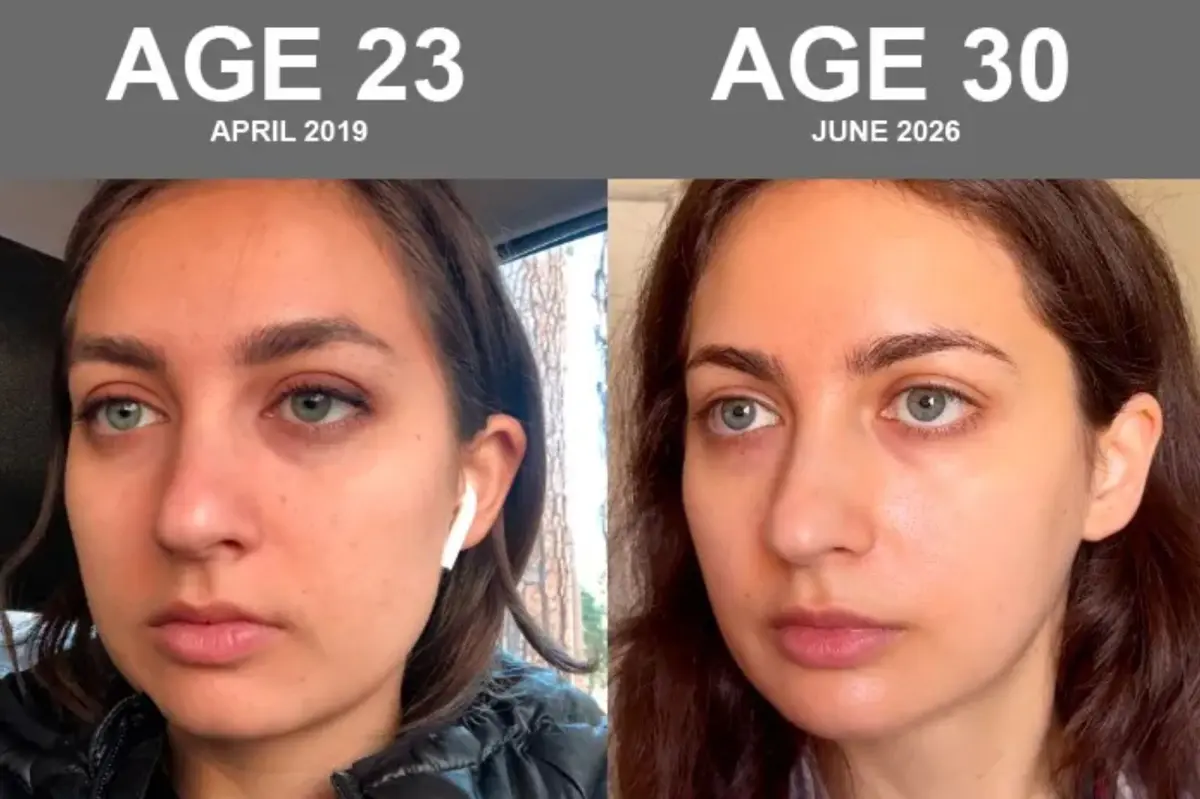
For most people, a trip abroad is an opportunity for inspiration, culture and connection. But for tech millionaire and longevity advocate Bryan Johnson, international travel is something else entirely.
After reviewing data from a previous trip to Asia, Johnson described long-haul flying as “barbaric for the body”, arguing that people should limit overseas travel to just once every three months. His reason? The invisible biological toll that international flights take on the human body.
Here’s a snapshot of the biological insult from international travel. It takes your body over two weeks to fully recover.It’s a big price tag.One international trip per quarter is a reasonable balance.Time to recover:> sleep duration: 2 days> grip strength: 5 days>… pic.twitter.com/IqckqZlBxX
Long before he became the face of the anti-ageing movement, the 48-year-old American entrepreneur built his fortune in the tech industry. Johnson founded Braintree, a mobile and web payments company acquired by PayPal for $800 million in 2013.
After selling Braintree, Johnson turned his attention to science and longevity. He launched the OS Fund, which invests in breakthrough science startups, and founded Kernel, a neurotechnology company focused on understanding and measuring
brain activity.
Today, Johnson is best known for Project Blueprint, his highly publicised longevity experiment. He reportedly spends more than $2 million (around ₹18 crore) a year on a strict anti-ageing regimen designed to slow (or even reverse) biological ageing.
Johnson doesn’t just rely on feeling tired or jet-lagged. His lifestyle is built around tracking biological data.
After monitoring his body following his India trip, Johnson shared a breakdown on social media showing how long different aspects of his health took to recover after international travel:
Sleep duration: 2 daysGrip strength: 5 daysMood: 1 weekCortisol (stress hormones): 9 daysSleep quality and blood glucose: 2 weeks
According to Johnson’s measurements, some biological systems remained disrupted long after he felt normal again.
Key Insights & Highlights
“It’s a big price tag,” he wrote, arguing that the combination of time-zone changes, disrupted sleep schedules, dehydration and irregular eating patterns creates significant stress on the body.
Key Insights & Highlights
Johnson argues that long-haul flights combine several biological stressors at once. Travellers often experience circadian rhythm disruption, low cabin humidity, dehydration, reduced oxygen levels and extended periods of inactivity. Together, he believes these factors place a greater strain on the body’s recovery systems than most people realise.
To understand why Johnson cares so deeply about these numbers, it helps to understand his broader mission.
Project Blueprint is an aggressive, data-driven
anti-ageing programme designed to optimise every aspect of Johnson’s health. His days are structured around a precise diet, carefully monitored exercise routines and extensive medical testing that tracks hundreds of biomarkers.
From the perspective of someone trying to slow biological ageing, an international flight represents a measurable setback to months of health optimisation.
Unsurprisingly, Johnson’s advice to limit international travel to four times a year has sparked debate online.
Critics argue that
travel offers benefits that are difficult to capture through biological metrics alone. Exploring new cultures, building relationships, experiencing unfamiliar environments and stepping outside daily routines can all contribute to psychological well-being and personal growth.
Others questioned whether obsessing over health metrics to such an extreme degree could create its own form of stress.
Supporters, however, see Johnson’s findings as a useful reminder that modern travel comes with hidden physical costs. Long-haul flights may feel routine, but they can place significant demands on the body’s recovery systems.
Whether you agree with Johnson’s quarterly travel limit or not, his experiment raises an interesting question: how much of modern life are we willing to trade in pursuit of perfect health?
For many travellers, the answer remains simple. While the body may take days—or even weeks—to recover from a long-haul flight, the memories, experiences and connections gained along the way are often worth the biological cost.